About The Book
About the Book
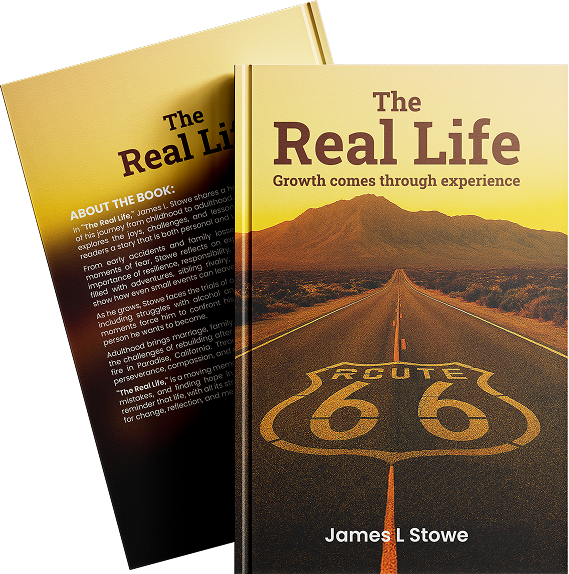
The Real life
At its core, The Real Life is a record of moments that leave marks physically, emotionally, and mentally. James L. Stowe structures the book through lived episodes rather than abstract ideas, allowing each chapter to stand as a self-contained encounter with consequence and awareness. The storytelling is direct, sensory, and grounded in real settings that shape behavior as much as choice does.
The chapters explore how the environment influences instinct, how familiarity can breed carelessness, and how quickly control can be lost. Stowe does not distance himself from these moments; instead, he revisits them with clarity, examining what was felt in the moment and what was learned later. This dual perspective gives the narrative its strength, balancing immediacy with reflection.
What distinguishes the book is its refusal to romanticize risk. Events unfold plainly, and their impact is allowed to settle without justification or exaggeration. Through this approach, The Real Life becomes less about thrill and more about understanding, how awareness is shaped, how judgment matures, and how experience quietly rewrites confidence.
The book speaks to readers who recognize themselves in imperfect decisions and evolving perspectives, offering a mirror rather than a message.
Why Read It
The Real Life is for readers who value honesty over exaggeration. It offers a clear-eyed look at how decisions are made in real time and how their consequences unfold long after. The book does not instruct or persuade; it reveals.
Readers will find resonance in the moments of overconfidence, risk, and reflection that define the narrative. These are experiences many recognize but rarely examine closely. Stowe’s willingness to revisit them with clarity allows readers to do the same with their own histories.
This book matters because it respects the reader’s intelligence. It trusts lived experience as its own authority and allows meaning to emerge naturally. For anyone who understands that life’s most lasting lessons are learned through experience rather than advice, The Real Life offers a compelling, grounded read.