Introduction
Have you ever noticed how your behavior changes based on your surroundings and the people around you? At home, you might feel relaxed, uncensored, and entirely yourself. Stepping outside into a bustling, noisy environment makes you more aware, perhaps even impatient. Sitting with certain people makes it easy to open up. When you sit with other people, you subconsciously pull back.
It’s tempting to think of personality as something fixed, something that belongs just to you. But what if this is only part of the story? What if your surroundings quietly influence more of your decisions than you realize?
The truth is that the environment shapes behavior in subtle, consistent, and often imperceptible ways. It is not always dramatic. It isn’t always obvious. But it mounts up over time, thus influencing how you respond, reflect, and even see yourself.
And the most startling part? You don’t always notice it as it happens. Only later, when you take a step back, do you realize how much of “you” is shaped by your surroundings.
1. You Think You’re in Control… But Are You?
The Illusion Of Independence
We prefer to believe that our decisions are completely our own. We think, decide, and act independently of everything around us. But is this truly true? Think about it.
Have you thoroughly chosen your response, or did you react to the situation you were placed in?
Subtle Influences Everywhere
Your surroundings are always speaking, but silently.
The atmosphere of the room.
The energy of others around you.
The pace at which things are happening.
It’s everything that nudges and shapes you, sometimes without your consent. And before you know it, you’re reacting in ways that seem natural, but may not be totally your own.
2. The People Around You Change You (More Than You Admit)
Energy Is Contagious
Spend enough time with specific people, and you’ll notice changes.
You pick up their phrases.
You reflect their attitudes.
You even adopt their pace of thought.
Stress spreads. Calmness also exists. So does ambition.
Different People, Different Versions of You
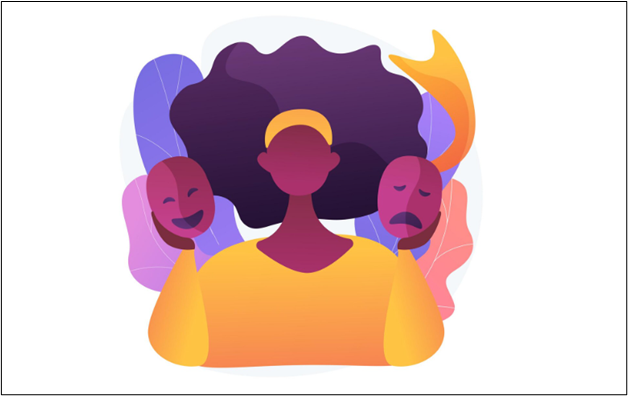
You’re not the same person to everyone.
- With friends, you may be easygoing and open.
- At work, more reserved and composed.
- With family, somewhere in between.
So Which One is The “Real” You?
Perhaps all of them. Or perhaps it demonstrates how much more the environment shapes behavior than we are willing to recognize.
3. Places Have Personalities Too
Spaces That Change Your Mood
Enter a crowded, chaotic room. Now enter a calm, peaceful one. You may feel the change right away.
One makes you restless.
The other allows you to breathe a little.
You don’t act the same everywhere. It’s more than just comfort; instead, it’s about behavior. In specific areas, you:
Improve your focus.
Speak differently.
Make great decisions.
While in others, you hurried. You reacted. You lose patience. It’s subtle yet strong. And over time, these shifts form patterns that you don’t even notice.
4. Familiarity Creates Invisible Habits
Autopilot Takes Over
The more time you spend in the same setting, the less you question your behavior there. Thus, it becomes automatic.
Same place, same reactions.
Same people, same replies.
Why Does Change Feel So Hard?
It’s simple to blame a lack of discipline. However, it is not always a matter of willpower. It’s all about context.
When your circumstances continue to reinforce the same habits, breaking free of them feels unnatural, even if you want to change.
5. The Small Moments You Do Not Notice
Where Environment meets Decision
Not all choices are deliberate. In truth, the majority aren’t. They occur in passing — quick, instinctual, and rarely observed.
A reaction in a tense room.
A rushed response in a difficult situation.
A pressure-influenced decision.
The environment shapes behavior most obviously during these times.
They Add Up Over Time
They don’t appear to be very impressive on their own. But together? They create patterns. Habits. Tendencies.
And before you know it, those small, unnoticed moments have quietly shaped who you are.
6. When You Finally Step Back
Distance Changes Everything
It’s difficult to notice patterns while you’re inside them. However, when you take a physical or emotional break, you begin to see things you had previously overlooked.
“That’s Not Even Me”
Have you ever left a situation with the thought:
“Why did I react like that?”
“That didn’t feel like me.”
That realization is powerful. Because it demonstrates that the environment shapes behavior, not forever, but significantly.
7. So What Can You Actually Do About It?
It Starts With Awareness
You do not have to be in control of every situation. That is impossible. But you can start to notice.
- When your mood changes.
- When your reactions seem automatic.
- When you behave differently than you expected.
Small shifts matter more than large changes. You do not need to completely redesign your life. Sometimes it’s as easy as:
- Changing your surroundings.
- Spending time with different individuals.
- Give yourself space to pause.
Because once you understand how the environment shapes behavior, you can begin to shape your own.
To Sum Up
It’s easy to think of yourself as consistent, fixed, and completely in control of your thoughts and actions. However, the truth is more convoluted. The places you visit and the people you meet shape you, silently and continuously.
The environment shapes behavior in subtle ways that have a long-lasting effect. It shapes your behaviors, habits, and even your sense of self—often without your knowledge.
Perhaps the idea is to comprehend the impact rather than entirely oppose it. To notice it. Because once you do, you get something powerful: the ability to stand back, change, and choose environments that bring out the version of yourself that you truly want to be.
If this prompted you to reflect, James L. Stowe’s “The Real Life” delves deeper. It investigates how real experiences, environments, and consequences influence us, offering an honest and thought-provoking look at the events that quietly define us.